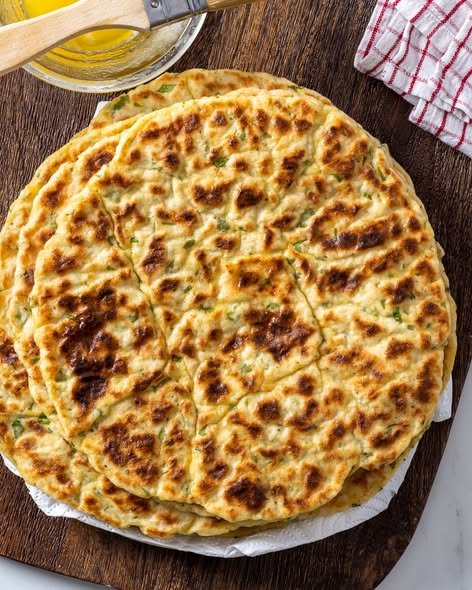
If comfort food and homemade wraps had a glow-up, this would be it. These gluten-free potato flatbreads are insanely soft, crazy flexible, and honestly taste like something straight out of a cozy café kitchen. No dry texture. No weird gluten-free aftertaste. Just warm, pillowy flatbread magic. 🔥
The real MVP here? Potatoes. Whether you’ve got fluffy mashed potatoes hanging out in the fridge or freshly riced potatoes ready to go, they transform this dough into something unbelievably tender and bendy. Like… fold-it, roll-it, stuff-it-with-everything kind of soft.
And the best part? This recipe skips the yeast completely. That means:
- no waiting around
- no rise time
- no proofing drama
- no complicated steps
Just mix, roll, and throw them onto a hot skillet.
The flavor situation is next-level too. Sharp cheddar melts right into the dough, parsley adds fresh herby vibes, and garlic powder gives every bite that savory punch that makes you keep reaching for “just one more.” Honestly, these flatbreads hit harder than most restaurant wraps.
Unlike traditional naan or classic potato breads, these stay super pliable even after cooling down. No cracking. No tearing. No cardboard texture the next day. They stay soft enough to wrap, fold, dip, or snack on straight from the pan.
Why These Potato Flatbreads Go Absolutely Crazy
- Naturally gluten-free
- Zero yeast required
- Soft enough to fold without breaking
- Made with simple pantry ingredients
- Perfect use for leftover mashed potatoes
- Crispy golden spots outside + fluffy center inside
- Easy enough for beginners
- Meal-prep friendly
These are basically the gluten-free wraps everyone wishes store-bought tortillas tasted like.
What Makes Potato Flatbread So Dang Soft?
Potatoes hold moisture like a champ, which is exactly why these flatbreads turn out ridiculously tender. Instead of drying out like many gluten-free recipes do, the potato starch keeps everything light, flexible, and plush.
Adding psyllium husk creates that stretchy, doughy texture usually missing from gluten-free baking. It acts like the glue holding everything together, making the dough easy to knead and roll out without splitting apart.
The combo is elite.
Flavor Upgrades You Can Totally Mess Around With
This recipe already packs serious flavor thanks to cheddar, parsley, and garlic powder, but you can absolutely customize the vibe.
Try adding:
- crushed red pepper flakes for heat
- rosemary for earthy flavor
- thyme for cozy herby notes
- cayenne for a spicy kick
- smoked paprika for smoky depth
- green onions for extra savory flavor
Basically, this dough can handle your creativity.
Pro Tips for Flatbread That Slaps Every Time
1. Weigh Your Ingredients
Potatoes and gluten-free flours can vary wildly depending on how packed they are. A digital kitchen scale gives the most consistent texture every single time.
2. Let Potatoes Cool Slightly
Hot potatoes can mess with the dough texture. Lukewarm or room-temp potatoes work best.
3. Roll Them Thin
Aim for about 1–2mm thickness. Thin flatbreads cook faster and get those gorgeous golden skillet bubbles.
4. Don’t Skip the Psyllium Husk
Seriously. It’s the secret weapon. Without it, the dough won’t have that stretchy, flexible feel.
5. Medium Heat Wins
Too hot and the outside burns before the inside cooks. Too low and they dry out. Medium to medium-high heat gives the best golden char spots.
Texture Check: What To Expect
These flatbreads come out:
- buttery soft
- bendable without cracking
- lightly chewy
- golden and blistered outside
- fluffy and steamy inside
Even people who normally side-eye gluten-free recipes usually can’t tell the difference.
That’s how legit these are.
Easy Ways To Serve Them
These potato flatbreads are ridiculously versatile.
Use them for:
- sandwich wraps
- breakfast tacos
- grilled chicken wraps
- dipping into hummus
- scooping curries
- flatbread pizzas
- cheesy snack rolls
- side bread for soups and stews
Or honestly? Eat one warm straight from the skillet with melted butter and call it self-care.
Ingredient Swaps That Actually Work
Millet Flour
Swap with finely ground brown rice flour.
Sorghum Flour
You can use:
- oat flour
- white teff flour
- light buckwheat flour
Psyllium Husk
No substitute here. It’s essential for the structure and flexibility.
If using psyllium powder instead of whole husks, use slightly less because it absorbs more moisture.
Storage + Reheating
These stay soft for days when stored in an airtight container in the fridge.
To bring back that fresh-off-the-skillet texture:
- microwave for 30–45 seconds
OR - warm in a skillet with a tiny splash of water and lid on
They bounce right back to life.
Final Thoughts
If you’ve been disappointed by dry, stiff gluten-free breads before, this recipe is about to change your whole perspective. These potato flatbreads are soft, flavorful, flexible, and ridiculously satisfying without needing yeast, eggs, or complicated techniques.
Once you make a batch, there’s a very real chance regular tortillas won’t hit the same anymore.
And yes… they’re THAT good.