
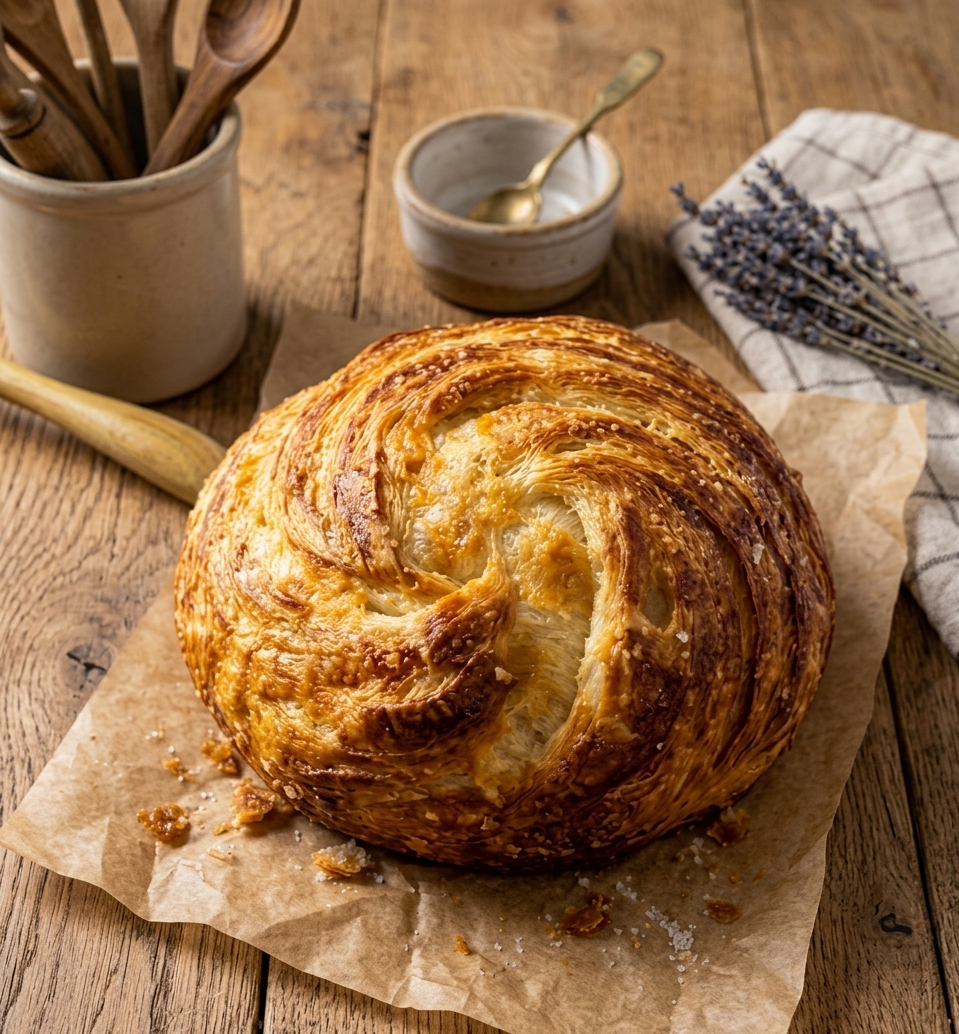
Let’s clear this up real quick—this isn’t a classic croissant. There’s no traditional lamination, no butter blocks getting folded a hundred times. But once this loaf hits the oven? It comes out with that same golden, crackly, flaky vibe that instantly reminds you of a croissant.
What’s the trick?
Cold, grated butter worked right into the dough during stretch and folds. Simple move… big payoff.
The result? A sourdough loaf with a crispy, layered crust and a soft, buttery interior that feels way more advanced than it actually is.
Why This Recipe Hits Different
🔥 Flaky, Golden Exterior
That grated butter melts into the dough in just the right way, creating a crisp, lightly layered crust that snaps when you cut into it.
🧈 Custom Butter Control
You’re not locked into one formula. Adjust the butter depending on your skill level or how rich you want the loaf—no greasy disasters if you do it right.
🍞 Soft, Buttery Crumb That Lasts
Even though the outside gets that crunch, the inside stays tender and rich for days. Butter does more than add flavor—it actually improves shelf life.
Ingredients
- 100g active sourdough starter (bubbly + recently fed)
- 350g water (adjust slightly if needed)
- 500g bread flour (don’t swap with all-purpose unless you know hydration control)
- 10g salt
- Cold butter (grated – amount depends on skill level)
How to Make It (Step-by-Step)
1. Mix + Autolyse
Combine starter and water, then add flour and salt. Mix into a rough, shaggy dough. Cover and let it rest for about 1 hour.
2. Build Dough Strength
Stretch and fold the dough until it tightens into a smooth ball (about 20–25 folds total). Let it rest for 30 minutes.
3. Add Butter (The Game-Changer Step)
During your stretch and folds:
- Add half the grated butter in the 2nd round
- Add the remaining butter in the 3rd round
Keep everything cool—this is key. If the butter melts, you lose the whole effect.
Do 4 total sets of stretch & folds, spaced 15–30 minutes apart.
4. Bulk Fermentation
Let the dough rise at room temp until about 70–75% increased in size.
Important: Don’t let it get too warm. If needed, pop it in the fridge briefly to keep the butter from melting.
5. Shape
Shape into a batard or round loaf. You can also go with a loaf pan if you want a softer sandwich-style result.
Place into a floured banneton, seam side up.
6. Cold Proof (Flavor + Texture Boost)
Refrigerate for at least 5 hours (up to 36 hours max).
This step firms up the butter again and helps create that flaky outer layer.
7. Bake Like a Pro
Preheat oven to 450°F (230°C) with a Dutch oven inside.
Bake:
- 30 minutes covered
- 10–15 minutes uncovered at 410°F (210°C)
Cool completely on a rack before slicing.
Butter Levels (Adjust Based on Skill)
- Beginner: 75g butter + 350g water
- Intermediate: 100g butter + 360g water
- Advanced: 115g butter + 370g water
More butter = richer flavor, but also trickier dough handling.
Pro Tips (Don’t Skip These)
- Keep your dough cool at all times—this is non-negotiable
- Freeze butter before grating for clean incorporation
- If dough gets greasy → chill it immediately
- Use high-quality butter for best flavor and texture
- Bake in a Dutch oven to lock in steam and boost crust
FAQ
Is this real croissant dough?
Not exactly. It skips traditional lamination, but still delivers a similar flaky crust through grated butter technique.
Why is my dough greasy?
Your butter got too warm. Chill the dough and keep your environment cooler next time.
Can I use all-purpose flour?
Not recommended unless you know how to adjust hydration. Bread flour gives better structure.
How long does this bread stay fresh?
Thanks to the butter, the crumb stays soft for up to 3–4 days when stored properly.
Can I freeze it?
Yes—wrap tightly and freeze like regular sourdough. Reheat before serving for best texture.
Why This Method Actually Works
Traditional croissants rely on laminated butter layers to create flakiness. This method shortcuts that process by distributing cold butter throughout the dough.
When baked, the butter melts and creates micro-layers in the crust, giving you that crispy, flaky finish—without the full pastry technique.
Flavor Variations (Once You Master the Base)
- 🧀 Ham & Cheese – fold in before shaping
- 🍫 Chocolate Chip – dessert-style loaf
- 🍇 Raisin + Cinnamon – sweet, bakery-style twist
Final Take
This isn’t just another sourdough loaf—it’s a smart hybrid. You get the depth of sourdough with a buttery upgrade that feels way more premium than the effort required.
Bake it once, and regular sourdough might start feeling a little basic.